
The information about the Keynote Speakers of ICBLS2026 is as follows, which will be updated regularly.
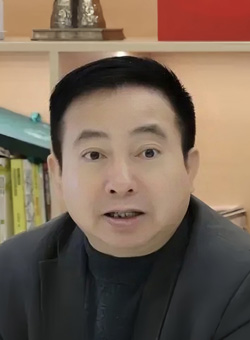
Dr. Shufeng Zhou, Professor
College of Chemical Engineering, Huaqiao University, Xiamen, China
Biography: Dr. Shu-Feng Zhou is a Distinguished Professor and doctoral supervisor at Huaqiao University, where he previously served as Dean of the College of Chemical Engineering. He has held academic, research, and leadership positions at the University of Auckland, National University of Singapore, Queensland University of Technology, RMIT University, and the University of South Florida (USF). At USF, he served as Associate Dean of the College of Pharmacy, Chair of the Department of Pharmaceutical Sciences, and Associate Vice President. His research focuses on drug discovery and development, drug metabolism and transport, nanomedicine, biochemical engineering, and precision medicine. Recognized repeatedly as a Clarivate Highly Cited Researcher, he has published more than 650 SCI-indexed papers, with over 65,000 citations and an h-index of 107, and has edited or contributed to 19 English-language scholarly books. He has secured more than US$65 million in cumulative research funding and mentored 42 postdoctoral researchers, 58 PhD students, and more than 120 master's students. His honors include appointments under national high-level international talent programs and Fujian Province's Hundred Foreign Experts Program. He has also served on an expert committee of the International Agency for Research on Cancer (IARC/WHO) and as a reviewer for major research and talent programs.
Topic: Targeting Kinases and Regulated Cell Death: New Strategies for Precision Cancer Therapy
Abstract: Targeted cancer therapy has evolved from inhibiting a single oncogene or signaling pathway toward coordinated interventions involving multiple targets and mechanisms. This presentation highlights our investigations into the design of tyrosine kinase inhibitors (TKIs) and the induction of regulated cell death. Novel small-molecule TKIs were designed and synthesized using kinase ATP-binding sites and fragment-based strategies, followed by evaluation of their antitumor activities and molecular targets. We also developed tumor-targeted nanodelivery systems designed to induce ferroptosis by increasing intracellular iron, promoting reactive oxygen species (ROS) generation, and downregulating GPX4. To trigger copper-dependent cell death (cuproptosis), we engineered near-infrared (NIR)-driven CuSiO3@Au–Pd micro/nanomotors for deeper tumor penetration. These systems perturb copper homeostasis, deplete glutathione (GSH), generate ROS, reduce mitochondrial membrane potential, and promote DLAT aggregation. Integrating TKI-mediated signaling inhibition with ferroptosis and cuproptosis may offer new approaches to overcoming therapeutic resistance and developing mechanism-based combination treatments in precision oncology.
© Copyright 2015-2026 14th International Conference on Biology and Life Sciences - All rights reserved.

 X (formerly Twitter)
 LinkedIn